
Dealer guide
A good share of the enquiries we receive come from dealers who are already well established. They sell counterbalance forklifts, or excavators and other construction machinery, often from Chinese manufacturers, and they have a workshop, service vans and a customer list built up over years. What they are missing is a supplier for warehouse equipment: pallet trucks, stackers, reach trucks and order pickers.
This guide is for those dealers. It covers why the warehouse range is worth adding, how to start it without tying up too much money, and what to agree with the factory before the first container.
Why warehouse trucks pay
The customers are the ones you already have. Logistics companies, retailers, manufacturers and builders’ merchants that buy a counterbalance forklift for the yard also need pallet trucks for the loading dock, stackers for the store and, as they grow, reach trucks and order pickers for racked aisles. If you do not offer them, someone else is visiting your customers to sell them.
Warehouse trucks also behave differently as a business:
- They sell more often and in larger numbers. A customer buys one forklift and several pallet trucks.
- Stock turns over faster. A pallet truck or walkie stacker on your floor sells much sooner than a forklift does.
- Your service team can handle them. Electric warehouse trucks are mechanically simpler than a diesel forklift: no engine, no gearbox, no exhaust system. A technician who knows forklifts learns them quickly.
- They bring steady parts business. Wheels, rollers, seals and batteries wear on every truck, every year.
If you are still setting up the dealership itself, start with our guide on how to become a forklift and pallet truck dealer.
More trucks per container
For a dealer used to importing forklifts, the container numbers are the first surprise. These are typical loads in one 40 ft high-cube container from our factory:
| Truck type | Approx. units per 40HQ |
|---|---|
| Compact lithium pallet trucks | about 140 |
| Pedestrian electric pallet trucks, 1.5 t | about 114 |
| Stackers, 1.0–1.5 t, lift up to 3.5 m | about 35 |
| Stackers, 1.6–2.0 t, lift 3.6–5.5 m | about 22 |
| Reach trucks, 1.5–2.0 t | about 22 |
| Electric counterbalance forklifts, 1.5 t | about 15 |
Masts cost container space; pedestrian pallet trucks stack flat and fill the gaps. That is why freight per truck is so much lower for warehouse equipment, and why a mixed container, with pallet trucks packed around stackers, is the normal way to buy.
A first range: start narrow
A common mistake is a first order that tries to cover everything. A small range of trucks that sell steadily does more for a new product line than a catalogue full of models nobody has asked for. A sensible first range looks like this:
- Hand pallet trucks, such as our BF, the entry product almost every customer needs (see the note for EU dealers below).
- A pedestrian lithium electric pallet truck, such as the SL15L3 or SL20L3, for shops, docks and light warehouse work.
- A walkie stacker of 1.2–1.5 t, such as the CL15JB, for loading racks and handling pallets in the store.
- A stand-on truck for longer distances: the SL20 stand-on pallet truck or the CL15E stand-on stacker, for customers whose operators travel far with each pallet.
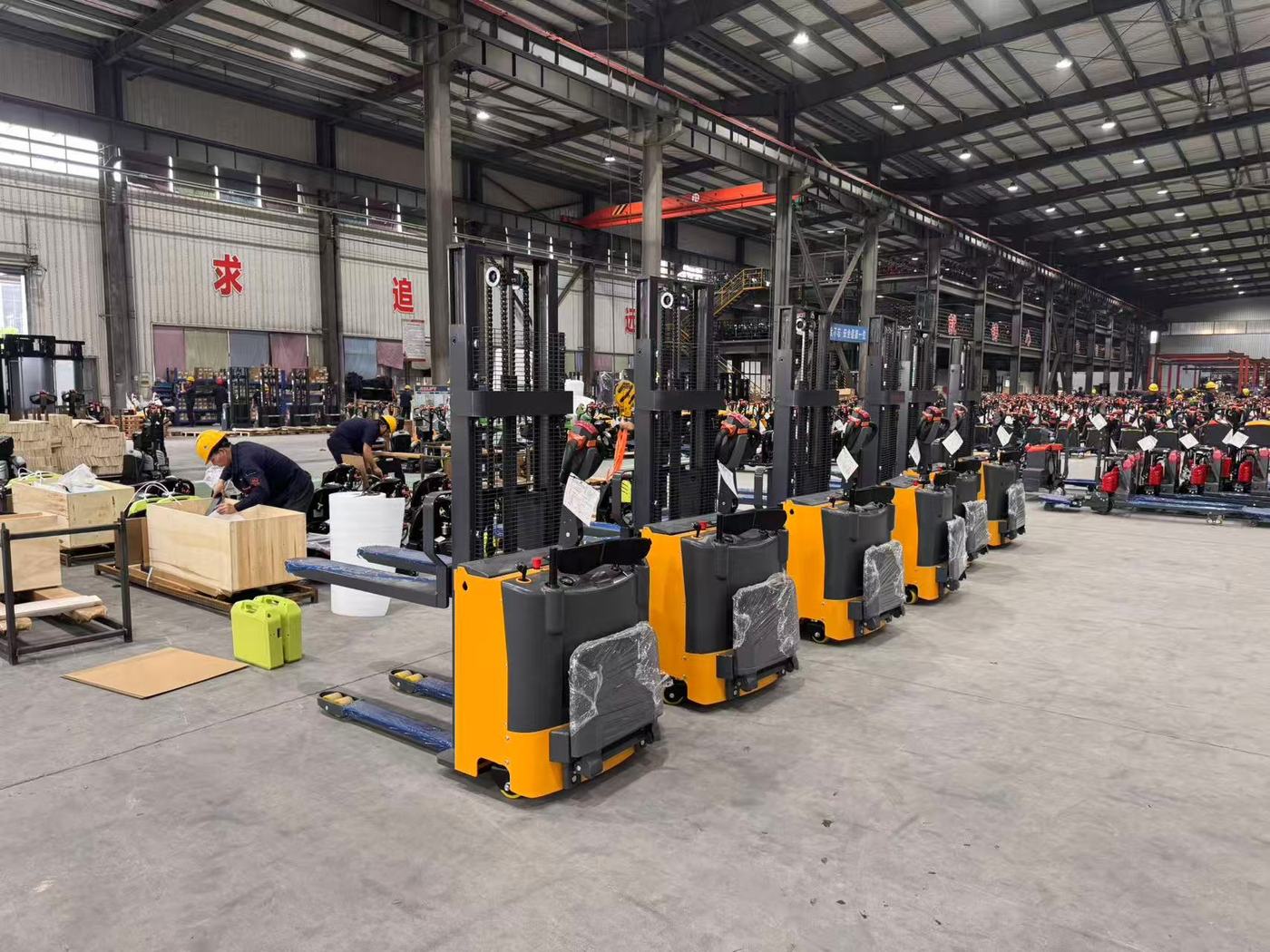
Stock the fast movers: pallet trucks and walkie stackers. Show them, demonstrate them and deliver them from your own warehouse. Sell the bigger trucks to order. A first container does not need to be large or uniform; our guide to a small mixed first order from China shows how a mixed order of a few models works in practice.
Reach trucks and order pickers: sell them to order
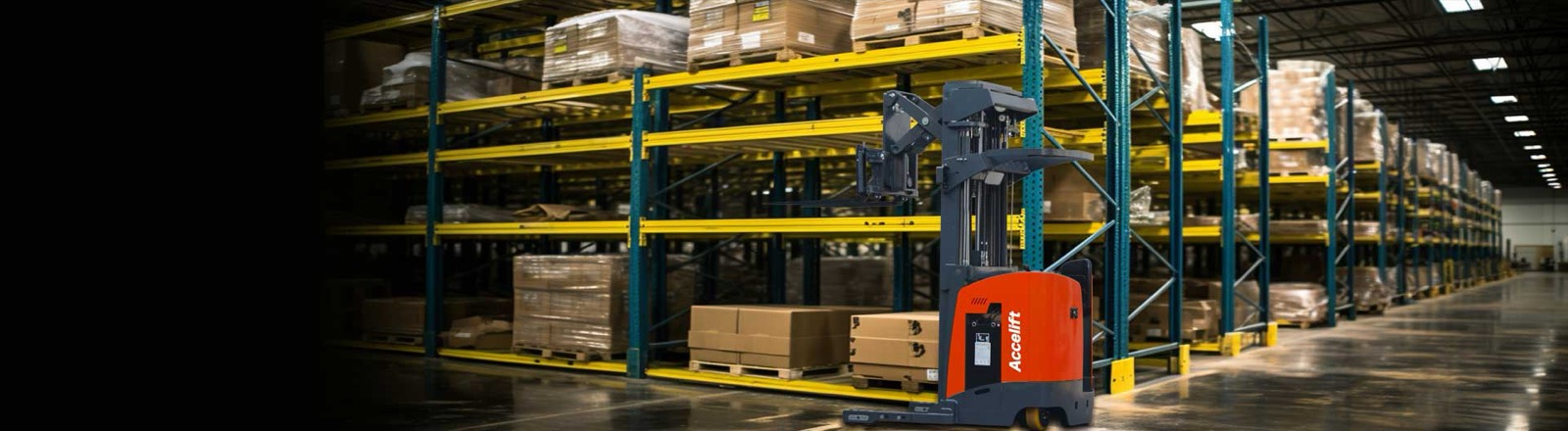
Reach trucks and order pickers are the next step, and they are where a forklift dealer’s experience counts. They are chosen for a particular building: the height of the top beam, the aisle width, the floor and the pallet. Each sale starts with a visit to the customer’s warehouse, so these trucks are best ordered once the configuration is known rather than held in stock.
Our range here includes the Q15GB and QGB18X reach trucks, the low-level order picker and the medium-level order picker. Our guide on how to choose a reach truck covers the questions to ask the customer before you quote.
What to settle with the factory
Before the first order, agree the following in writing:
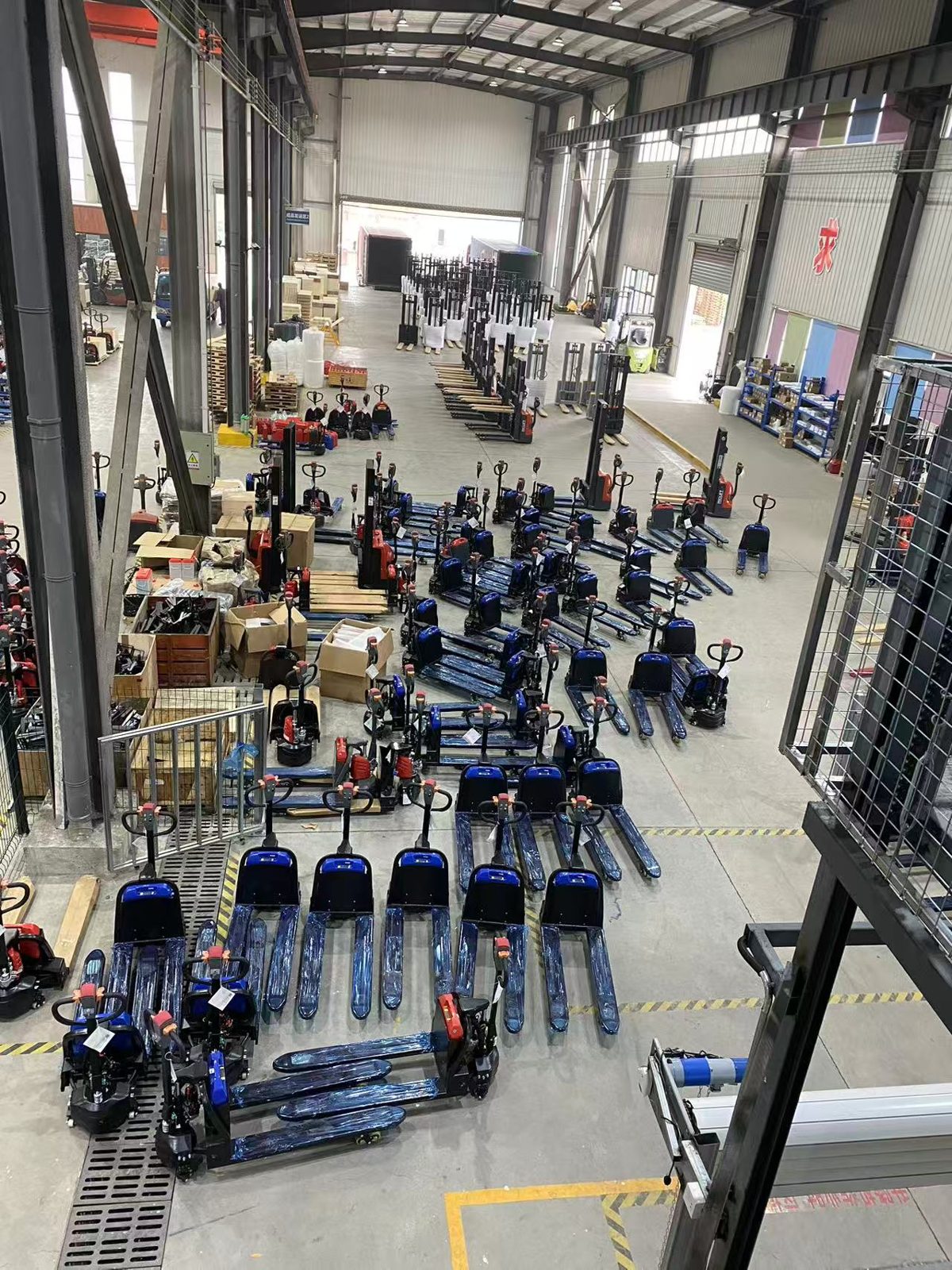
- Models and configurations. For each model: the battery (lead-acid or lithium, and its capacity), the mast height and the fork size. The price of the same model changes with these, so compare offers on the same configuration.
- CE documents for each model, if you sell in Europe.
- Colour and logo. We supply trucks in the dealer’s colour and with the dealer’s logo. A forklift dealer often wants the warehouse range to match its existing brand; our guide to private label pallet trucks and stackers explains what we need from you.
- Spare parts and training for your technicians. Ask for the operating and service manuals, the parts lists and the wiring diagrams for every model. Your workshop will need them for the first repair, so get them with the first shipment.
- Warranty and claims. Our warranty is one year. Agree what you send with a claim and how the replacement part reaches you.
- Lead time and delivery terms. Our lead time is about one month from order confirmation, and we quote FOB Shanghai or Ningbo.
A note for EU dealers: hand pallet trucks
Manual hand pallet trucks from China carry an EU anti-dumping duty, at 70.8% for most Chinese makers. Electric pallet trucks and stackers are outside that measure. In practice, EU dealers usually source their hand pallet trucks elsewhere and buy the electric models from China. For EU customers we focus on electric pallet trucks and stackers. Our guide to the EU anti-dumping duty on Chinese hand pallet trucks explains what the measure covers.
How to sell the range
A forklift dealer already knows how to sell machines. A few habits work especially well with warehouse trucks:
- Demo trucks. Keep one pallet truck and one stacker in the van or ready to deliver. An operator who has driven a truck for a day is easy to sell to.
- A short-term rental fleet. Customers need extra trucks at peak season or when their own truck is in for repair. Rental units also become demo trucks, and later used stock.
- Service contracts. Offer a fixed regular service for the customer’s whole fleet, forklifts and warehouse trucks together. It keeps your technicians busy and keeps the customer coming to you for the next truck.
We work with forklift and machinery dealers who are adding a warehouse range under our name or their own. If that is you, see our distributor and private label programme and tell us which models you have in mind.