
Dealer guide
Most forklift and pallet truck dealers did not start as dealers. They were rental companies, repair workshops, packaging suppliers or importers of something else, and they noticed that their customers kept asking for the same machines. This guide is for that moment: what the business looks like, what it takes to start, and how to choose the factory behind you.
What a material handling dealer actually sells
A dealer sells three things, and only the first one is a machine.
- The truck. Pallet trucks, stackers, reach trucks and forklifts, sold or leased to warehouses, shops, factories and logistics companies.
- Uptime. Service visits, batteries, wheels, repairs. A warehouse that cannot move pallets stops working, so the customer stays with the dealer who fixes things fastest.
- Advice. Which truck for which aisle, which battery for which shift, whether the floor will take it. Customers who get good advice once tend to come back for the next truck.
The margin on a single machine pays for the sale. Service, parts and the second and third order are what build the business.
Where to start: the product range
Do not start with forklifts. Start with the machines every warehouse needs, that are easy to explain and that fit many to a container.
Electric pallet trucks
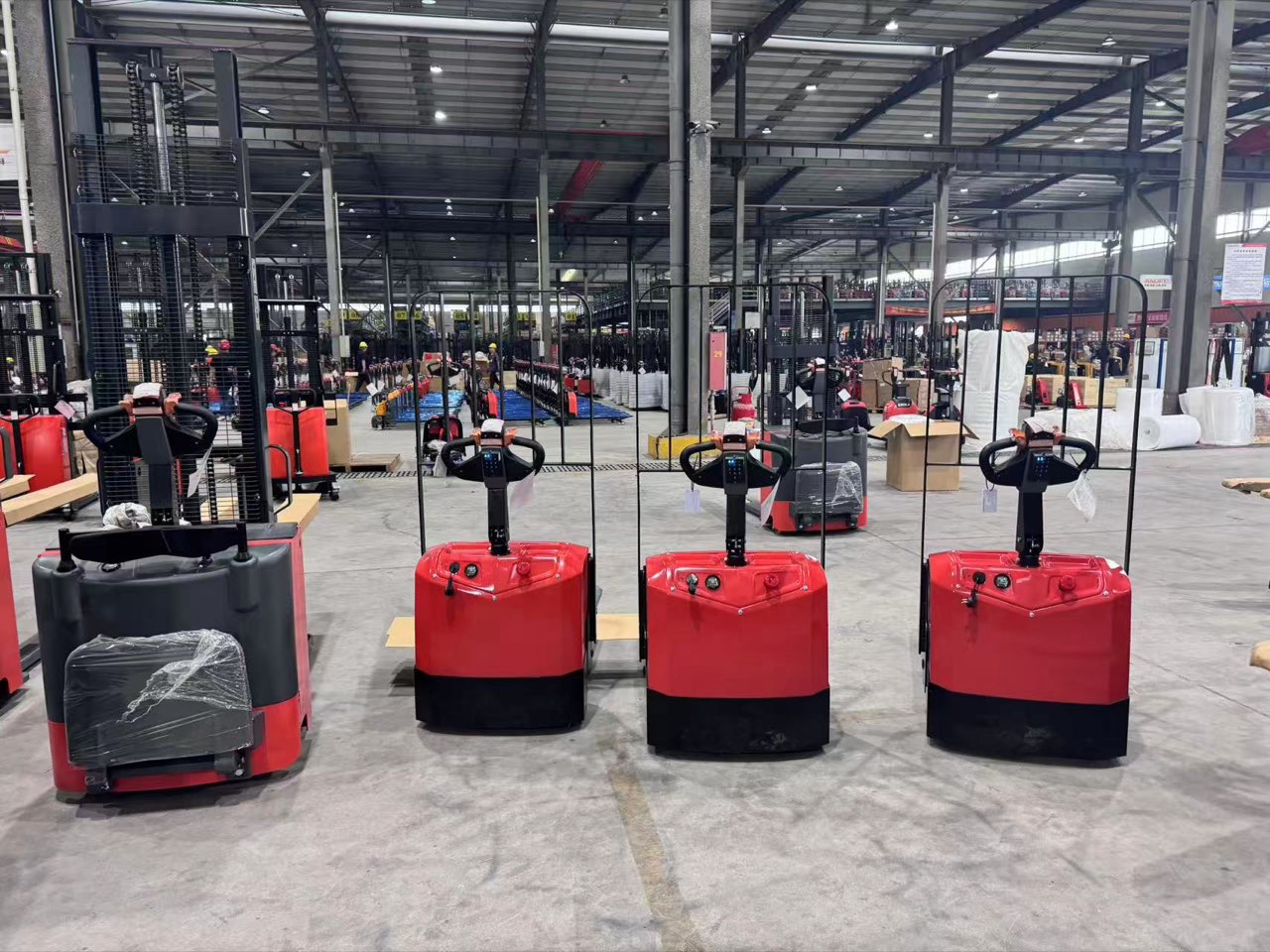
The entry point for almost every dealer. Every warehouse, supermarket and factory with pallets needs them, the price is easy to justify against a hand pallet truck, and a pedestrian model packs tight: we load around 114 of our 1.5 t pedestrian trucks into one 40 ft container. A range of three covers most demand: a compact 1.5 t lithium truck such as the SL15GI, a 2 t workhorse such as the SL20GH, and a 3 t truck for heavy loads such as the SL30S7.
Electric stackers
The natural second product. The same customers who buy pallet trucks need to put pallets on racking. A 1.2–1.5 t walkie stacker with a 3 m lift, such as the CL1230J, sells into the same warehouses at a higher ticket.
Then reach trucks and forklifts
Once you have customers and a service routine, move up. These are bigger sales with bigger margins, but they take more container space, more training and more after-sales capability.
What you need before the first order
- A market you know. A region, an industry, or a customer list. Dealers who start with “the whole country” usually end up with nothing in particular.
- Somewhere to keep machines and parts. It does not need to be large. A unit that holds a few demonstration trucks, a battery charger and a shelf of wear parts is enough to start.
- Someone who can fix a truck. One technician who understands DC motors, controllers, hydraulics and batteries. Most faults on electric warehouse trucks are simple once you have seen them twice; see our guide to why an electric pallet jack stops lifting.
- Working capital for one container. A first order is usually one mixed container. Plan for the payment terms, sea freight, import duty and the weeks between shipment and your first sales.
- Local compliance. Check what your market requires for machinery, batteries and electrical equipment before you order, and ask the factory for the documents up front.
Choosing the manufacturer
The factory behind you decides your margins, your lead times and how often your phone rings with complaints. Questions worth asking any supplier, including us:
- Do you make the trucks yourselves? Ask for a video call from the production floor, not a showroom.
- Which components are inside? Controllers, motors, batteries and pumps from known suppliers are easier to service and to source locally.
- What is in the first container? A good supplier will propose a mixed container and a small stock of wear parts, so the parts are on your shelf before the first machine needs them.
- Can the trucks carry my brand? OEM colours and logos let you build your own name in the market rather than someone else’s.
- How do you handle a warranty claim? Ask for the process in writing: photos, fault code, part shipped, credit. Vague answers here become expensive later.
- Do you already have a dealer in my area? A serious manufacturer protects its existing dealers. If the answer is “we sell to anyone”, your competitor can buy the same truck next month.
For the practical side of the first shipment, container counts, lead times, documents and spare parts, read importing warehouse equipment from China.
The first year
A realistic first year looks like this: one mixed container, a few demonstration trucks working at customers’ sites, a first service contract, and a second container ordered when the first is mostly sold. The dealers who grow fastest are the ones who put a truck into a customer’s warehouse for a week and let it sell itself.
Three habits help:
- Keep wear parts in stock from day one: drive wheels, load wheels, a contactor, a fuse set, a charger.
- Record every truck you sell, with its serial number and battery type. It makes service and repeat sales far easier.
- Visit customers after the sale. The second order usually comes from the first customer.
Becoming an Accelift dealer
Accelift builds electric pallet trucks, stackers, reach trucks and forklifts in our own plant in Huzhou, Zhejiang, and exports to more than 40 countries. We work with dealers and distributors, offer OEM branding, and plan mixed containers for first orders. Distribution is open in selected markets.
If you are thinking about starting or adding a material handling line, contact us with your country, your current business and the products you are interested in. We will tell you honestly whether your market is open.