
Dealer guide
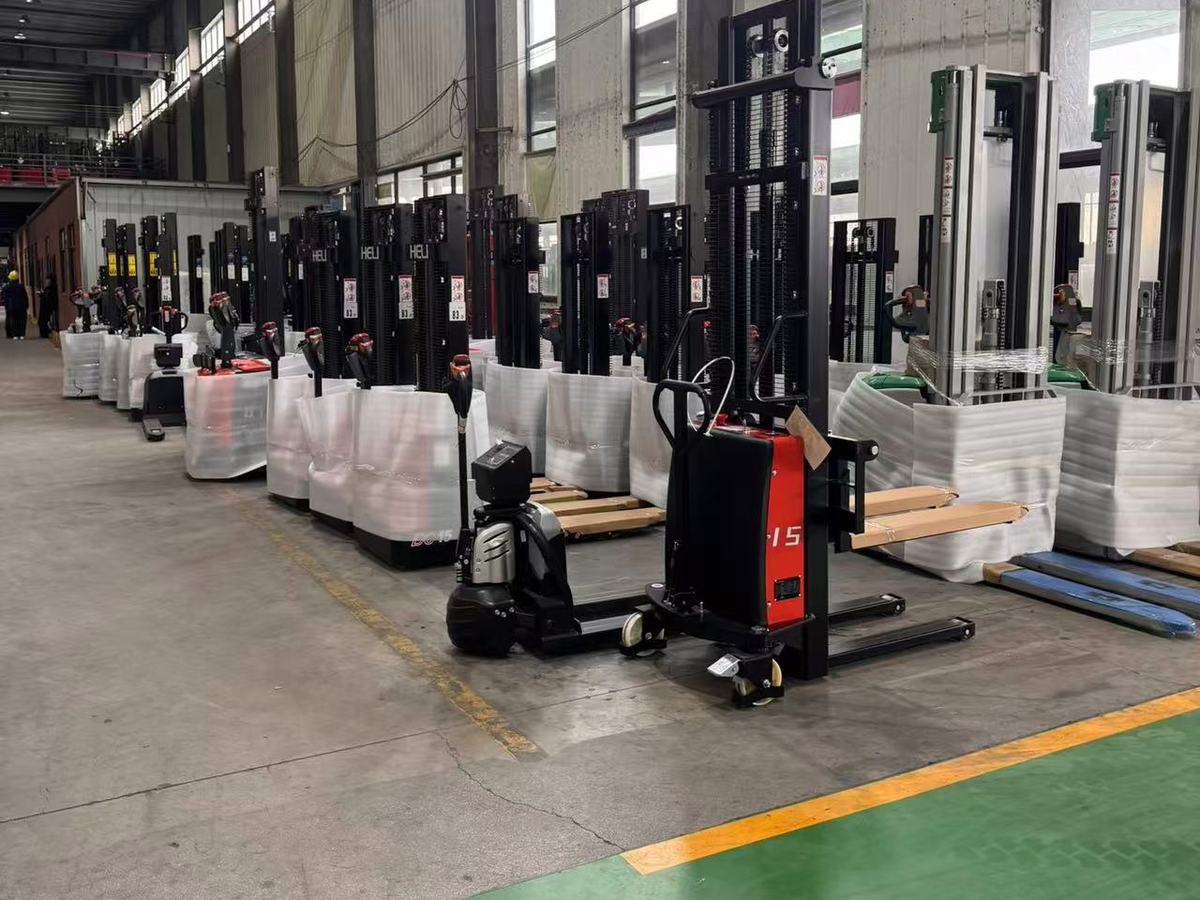
Most advice about importing from China starts with a full container. That is how the numbers work best, but it is not how most dealers begin. Before committing to a hundred machines, a careful buyer wants to see the trucks, show them to customers and find out which models actually sell in their market.
That is why our minimum order is ten machines, and they do not have to be the same model. This guide explains how a small mixed first order works: what to put in it, how it travels and what changes when you move up to a container.
Why start with ten
- Demonstration machines. The fastest way to sell a pallet truck is to leave one in a customer’s warehouse for a week. Ten machines gives you stock to sell and stock to lend.
- Find out what sells. Your market may want 2 t pallet trucks where you expected 1.5 t, or stackers with 3 m of lift rather than 1.6 m. A small order tells you before a big one costs you.
- See the factory’s work. Build quality, packing, documents, the way questions are answered. A small order tests all of it.
- Learn the service side. Your technician gets to know the machines before there are fifty of them in the field.
What a sensible first mix looks like
Choose machines that sell to the same customers. Two mixes our dealers often start with:
Warehouse trucks only
- 6 electric pallet trucks, such as the compact SL15L3 with a lithium battery
- 4 walkie electric stackers, such as the CL1530JB with 1.5 t capacity and 3 m lift
These two are among our best-selling models. Almost every warehouse that buys an electric pallet truck needs a stacker sooner or later, so the same visit sells both.
Warehouse trucks and cleaning machines
- 4 electric pallet trucks
- 3 electric stackers
- 3 floor scrubbers, for example two JC60 walk-behinds and one JC75/85-B ride-on
Warehouses, factories and supermarkets that move pallets also clean floors. A dealer who already visits them can sell both, and a mixed order lets you test the cleaning line without committing to it.
How ten machines travel
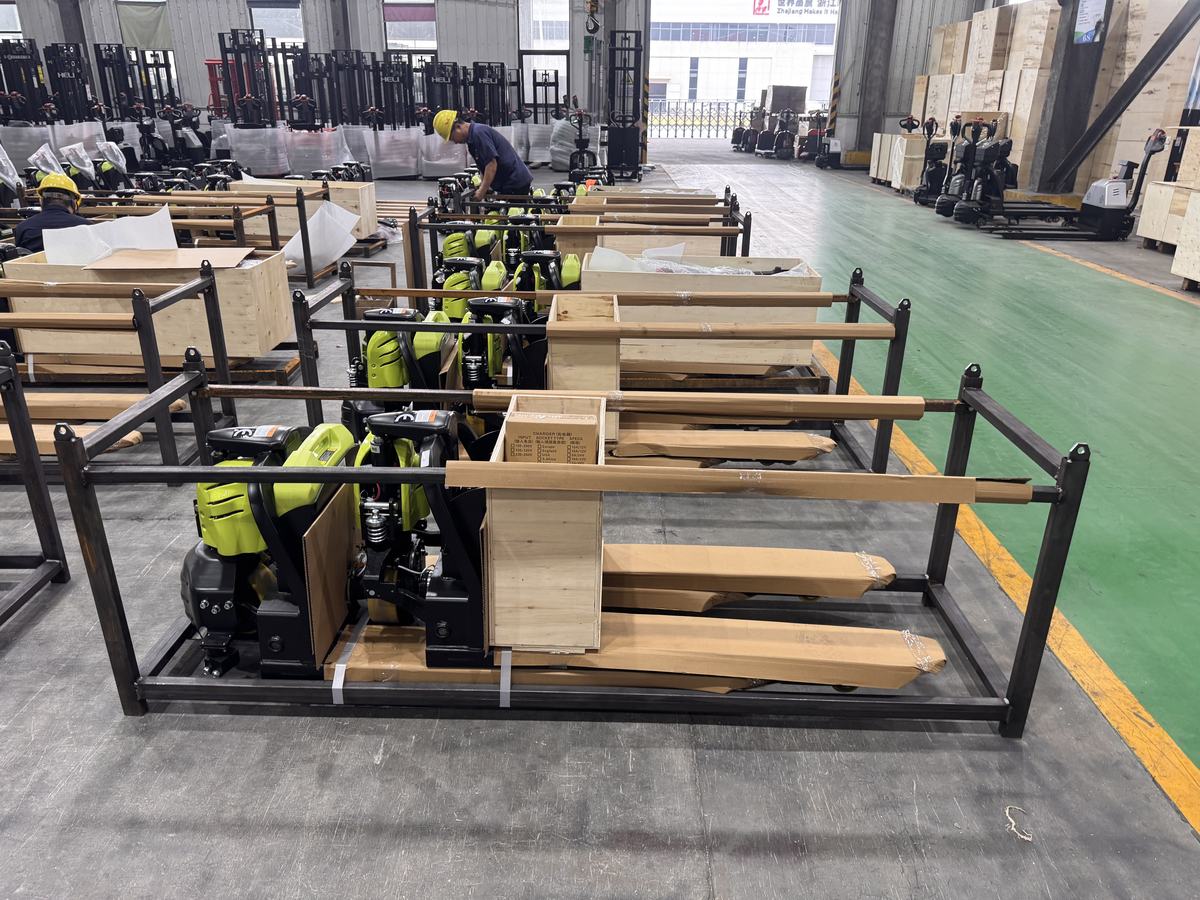
Ten machines rarely fill a container. There are two ways to ship them.
LCL: shared container
Your machines travel in a container shared with other shippers’ cargo, and you pay by volume (cubic metres) rather than by the box. Pallet trucks are compact and ship cheaply this way; stackers are tall and take more space.
Two things to watch. First, ask your forwarder for the cost to your door, not only the sea freight. LCL cargo is unloaded at a warehouse at the destination port, and the handling charges there can be a large part of the total. Second, lithium batteries ship as dangerous goods, and not every consolidator accepts them. Check before you book; our guide to shipping lithium pallet trucks explains why.
A 20 ft container of your own
Once a shared shipment gets large, a 20 ft container of your own can cost about the same and is simpler at the destination: no warehouse handling, no waiting for other people’s cargo to clear customs. If your first order is nearer twenty machines than ten, ask for both quotes and compare.
Packing for a small shipment
Machines in a shared container are moved by forklift several times on the way, at the port in China, at the consolidation warehouse and again at the destination. Each one should travel on a pallet or in a crate that a forklift can pick up safely. Tell us when you order that the goods will go LCL, so the packing is planned for it.
What changes on the second order
When the first machines have sold, a full container brings the freight cost per machine down sharply. These are the figures we work to for a 40 ft high-cube container of a single type:
| Machine | Units per 40 ft container |
| Electric pallet truck, 1.5 t, pedestrian | 114 |
| Electric pallet truck, 1.5–2.0 t, lithium, compact | 140 |
| Electric stacker, 1.0–1.5 t, up to 3.5 m lift | 35 |
| Electric stacker, 1.6–2.0 t, 3.6–5.5 m lift | 22 |
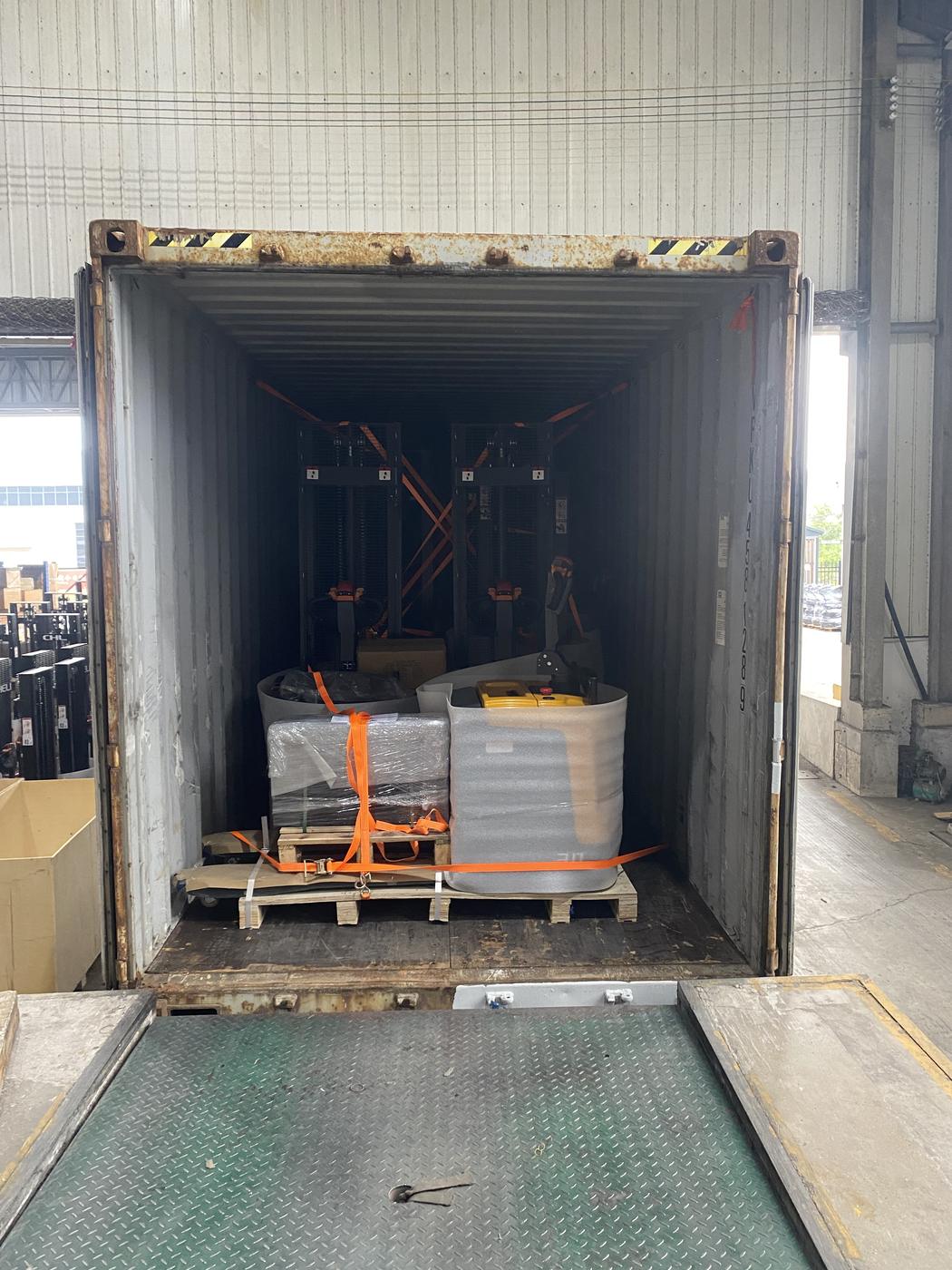
Most dealers mix models in the container too. We plan the load around your order: tall machines at the back, pallet trucks packed round them. See how we loaded a mixed 40 ft container for a dealer in Peru.
Questions to settle before you pay
- Is the price FOB Shanghai, or delivered to your port (CIF)?
- LCL or a full container, and what does each cost to your door?
- Lead-acid or lithium batteries, and does your forwarder accept lithium?
- Your mains voltage and plug type, so the right chargers are packed
- Manuals, spare parts lists and the documents your customs broker needs
- Which wear parts to add to the shipment while it is small and cheap to do so
- Warranty terms, in writing
For the wider picture, lead times, HS codes and spare parts, read importing warehouse equipment from China. When you are ready, send us the models you have in mind and your destination port, and we will come back with a quotation and the best way to ship them.