
Buying guide
A warehouse floor collects two kinds of dirt. One is loose: dust, sand, scraps of stretch film, splinters from pallets, leaves blown in through the dock doors. The other is stuck: tyre marks, oil film, a grey layer of fine dirt pressed into the surface. A sweeper deals with the first kind and a floor scrubber with the second, and neither does the other's job well.
This guide is about sweepers: what they do, when a walk-behind machine is enough, when a ride-on pays, and which figures on the spec sheet to read. For scrubbers, see how to choose a floor scrubber.
Sweeper or scrubber?
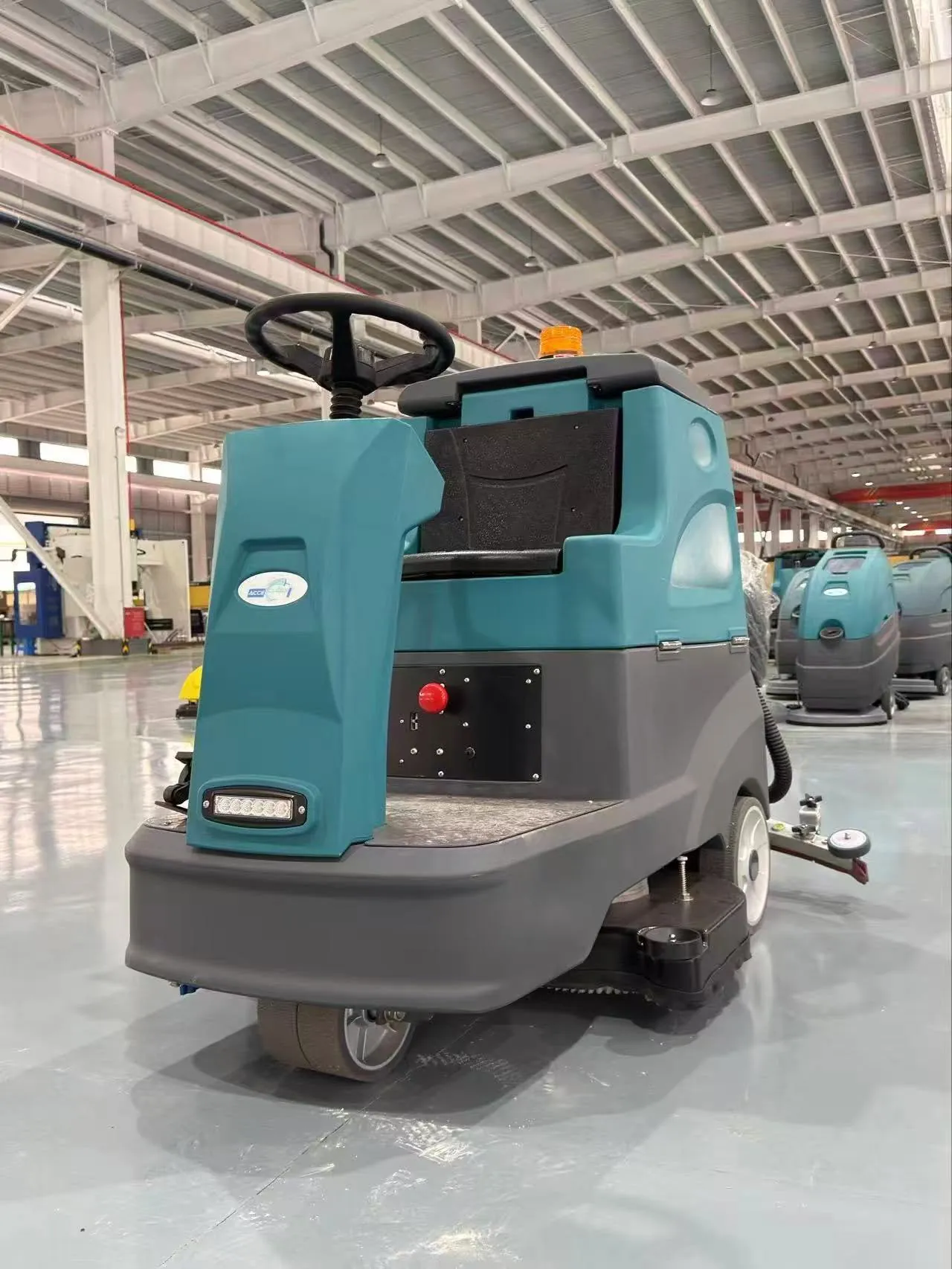
A sweeper works dry. Side brushes pull debris in from the edges, a main brush throws it into a hopper, and a fan draws the dust through a filter so that it stays in the machine. A scrubber works wet: it lays down water, scrubs, and recovers the dirty water with a squeegee and a vacuum.
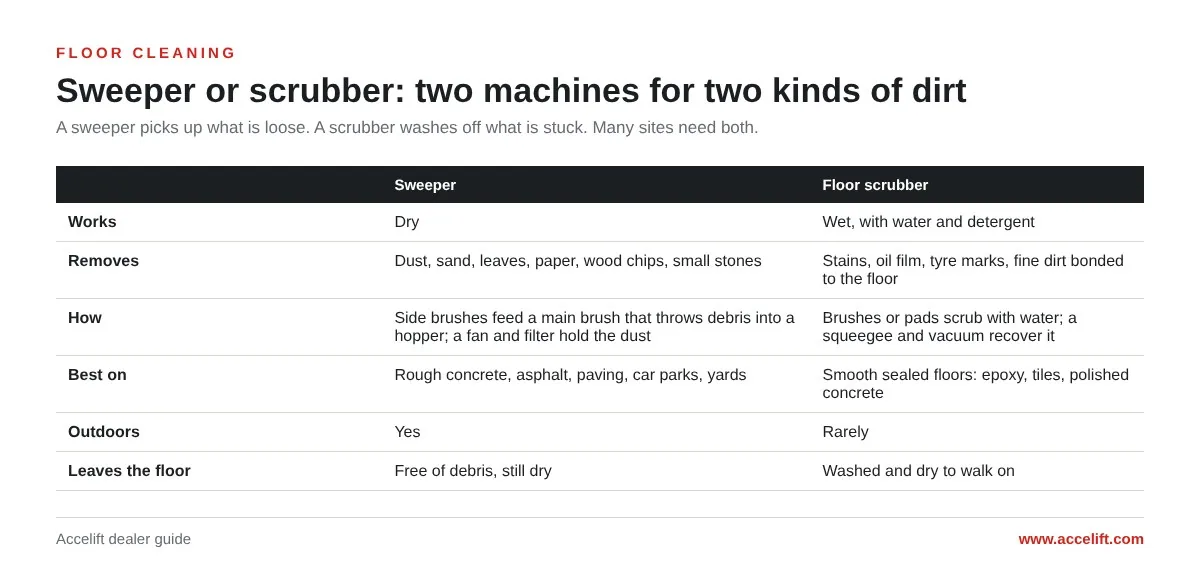
- Choose a sweeper for car parks, yards, loading areas, rough concrete, asphalt and paving, and anywhere there is more debris than grime.
- Choose a scrubber for smooth, sealed indoor floors that have to look clean: retail, food, pharmaceutical, showrooms.
- Use both in a busy warehouse. Sweep first, then scrub. A scrubber sent over a floor covered in debris blocks its squeegee and leaves streaks.
Walk-behind or ride-on?
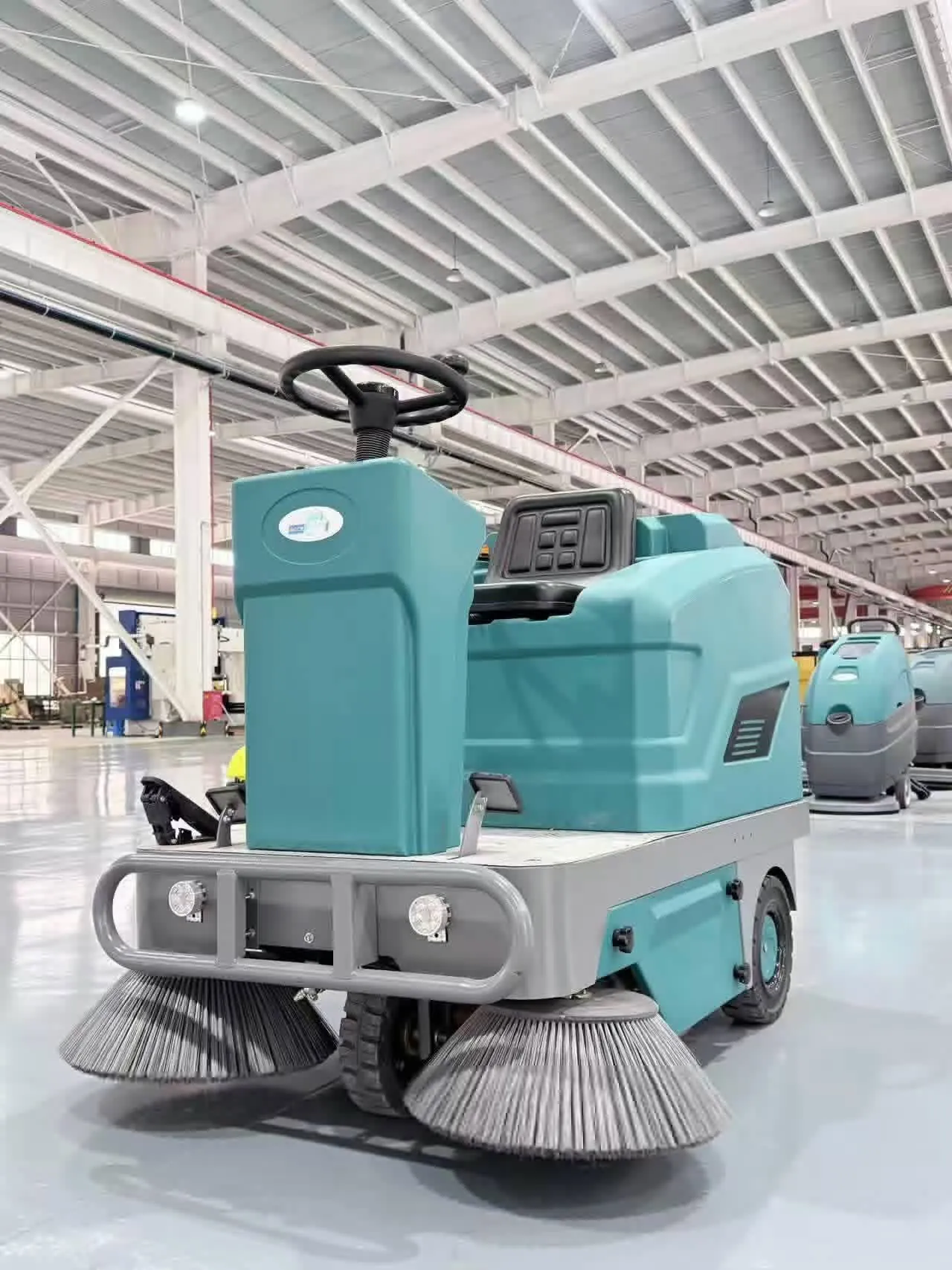
The area decides. A walk-behind sweeper moves at walking pace and sweeps a path of well under a metre. A ride-on sweeper covers 1.1 to more than 2 metres at two or three times the speed.
- Walk-behind. Workshops, small warehouses, shop entrances and the corners a larger machine cannot reach. As a rule, up to about 2,000 m² swept once a day. Low price, easy to store, no training needed.
- Ride-on. From about 3,000 m², or any site swept more than once a day. The operator sits, so a shift of sweeping is realistic, and the hopper holds enough to work for an hour or more between emptying.
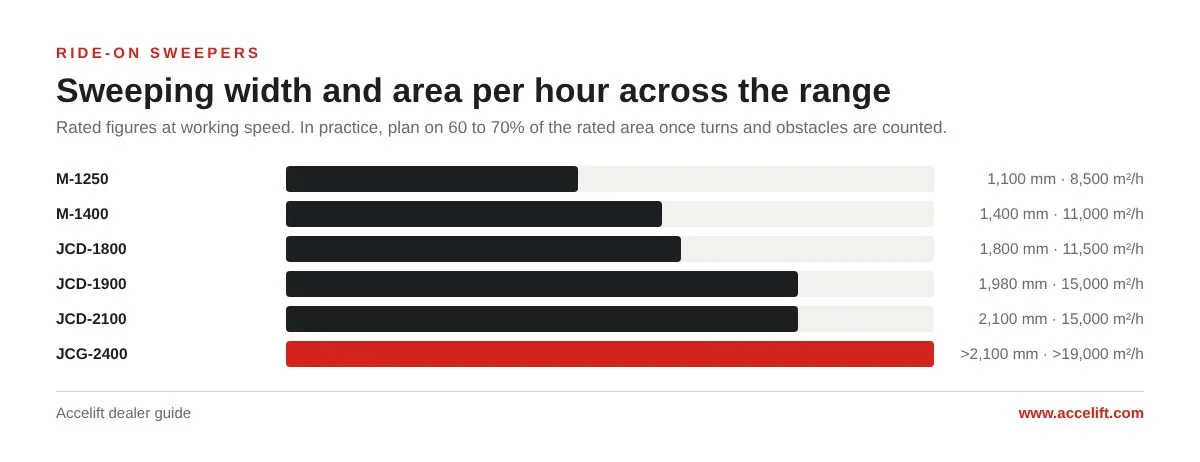
Check the narrowest point of the route as well as the area. A ride-on that cannot pass between two racks or through a personnel door will sweep less than the brochure says. The smallest ride-on in our range, the M-1250, sweeps 1,100 mm and turns on the spot for that reason.
The figures that matter
- Sweeping width. Measured with the side brushes. A machine with a 500 mm main brush and two side brushes sweeps about 1,100 mm.
- Area per hour. The rated figure is width multiplied by working speed. Plan on 60 to 70% of it once turns, obstacles and emptying are counted.
- Hopper capacity. From 90 litres on a compact ride-on to 240 litres on the large machines. Light, bulky rubbish such as leaves and film fills a hopper long before its weight limit.
- Filter area and filter shaker. The filter is what keeps dust out of the air. A larger filter clogs more slowly, and a shaker clears it without opening the machine.
- Water spray. A small water tank and spray nozzles at the side brushes damp the dust on dry outdoor surfaces.
- Climbing ability. Ramps between levels and dock approaches need 20% or more. Our ride-on sweepers climb 25 to 30%.
- Battery and running time. Most ride-on sweepers run on 48 V and work four to eight hours on a charge. Match the running time to the shift, not to the area.
- Open seat or cab. A cab matters outdoors in rain, cold or heat, and on dusty sites.
Matching the machine to the site
- Warehouse aisles and loading docks: a compact ride-on, 1,100 to 1,400 mm, such as the M-1250 or the M-1400.
- Factory halls, car parks and logistics yards: 1,800 to 2,100 mm, such as the JCD-1800, the JCD-1900 or the JCD-2100.
- Large outdoor sites, industrial parks and estates: an enclosed-cab machine that can travel between areas, such as the JCG-2400, which works at 11 km/h and travels at 16 km/h.
What the machine will need
A sweeper is cheap to run, but it does have wear parts, and a dealer should hold them: main brush, side brushes, filter, the rubber skirts around the brush chamber, and drive belts. Brushes last longest on smooth concrete and shortest on rough asphalt. The operator's daily routine is short: empty the hopper, shake the filter, check the brushes for string and strapping, and charge the battery.
Questions to ask the supplier
- What is the sweeping width with and without side brushes?
- How large is the filter, and how is it cleaned?
- Is the hopper emptied by hand or by a lift, and to what height?
- Which battery is fitted, and how many hours does it give on one charge?
- Which wear parts should be ordered with the machine?
Our sweepers and scrubbers are built in the same plant as our pallet trucks and stackers, and travel in the same container. The full range is on the sweeper page. If you send us the area, the floor and what has to be swept up, we will suggest a machine.