
Wheel selection guide
Two pallet trucks with the same load capacity can feel quite different on the same floor. Wheel material is one reason: it affects rolling effort, noise and how the truck interacts with the floor.
For hand pallet trucks, nylon is a useful starting point on hard, smooth floors where easy rolling matters. Polyurethane is worth considering where quieter operation and floor protection are priorities. Neither is the best choice for every workplace.
Start with the floor and the route, then choose the wheels.
Polyurethane and nylon at a glance
| What matters to you? | What to consider |
|---|---|
| Easy rolling on hard, even floors | Nylon is a common option |
| Lower noise and cushioning | Consider a suitable polyurethane tread |
| Protection of finished floors | Check the tread specification and test on the actual surface |
| Frequent washing or chemical exposure | Confirm the complete wheel and bearing specification |
| Replacement wheels | Match dimensions, load rating and fit, as well as material |
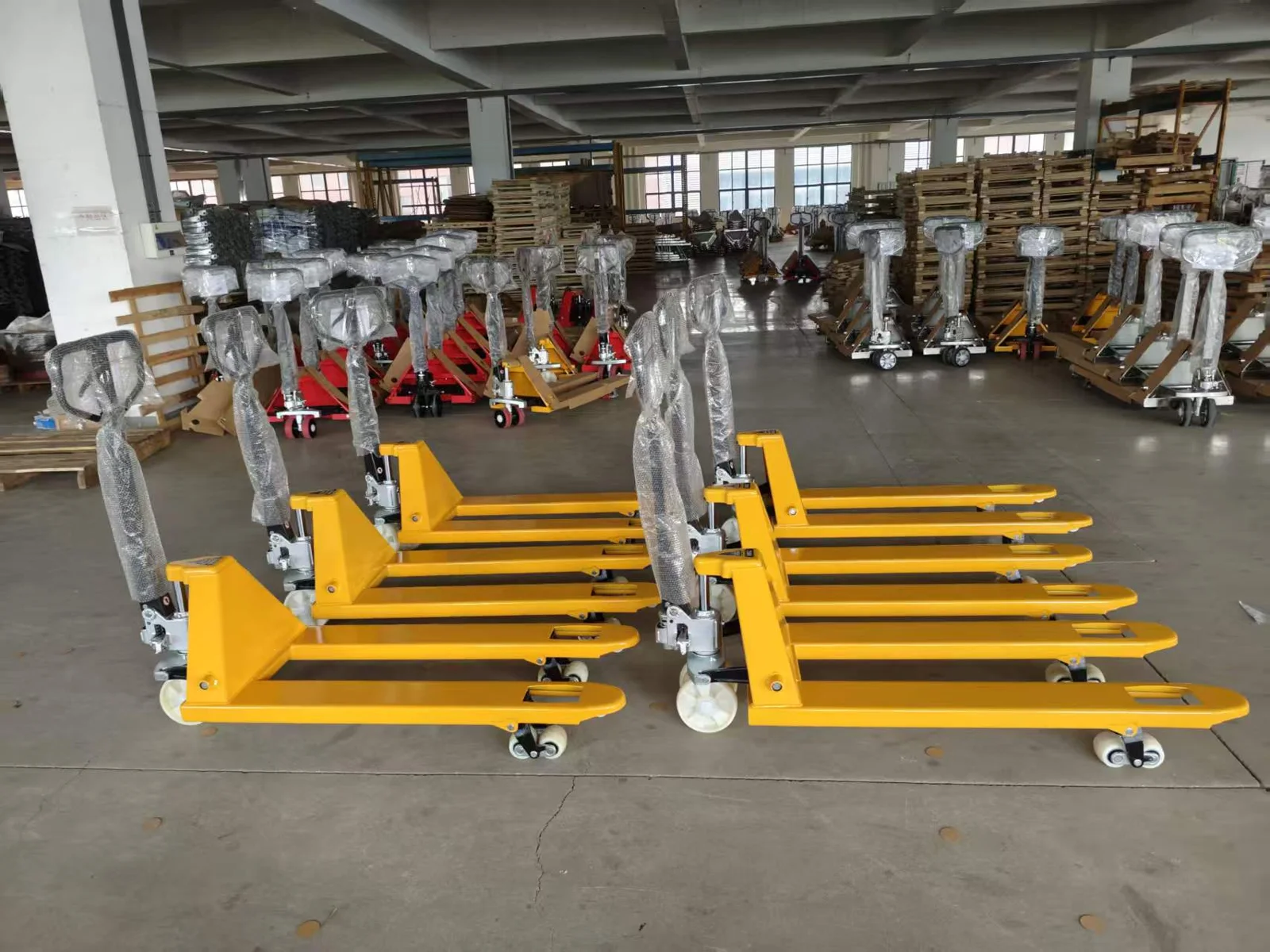
When nylon makes sense
Nylon load rollers are hard and have low rolling resistance. They can work well on smooth, even industrial floors. Their hardness also means limited cushioning: assess the whole route, including joints, doorways and loading areas.
Nylon and polyurethane rollers are both available in wear-resistant designs. Material alone does not determine service life.
When polyurethane makes sense
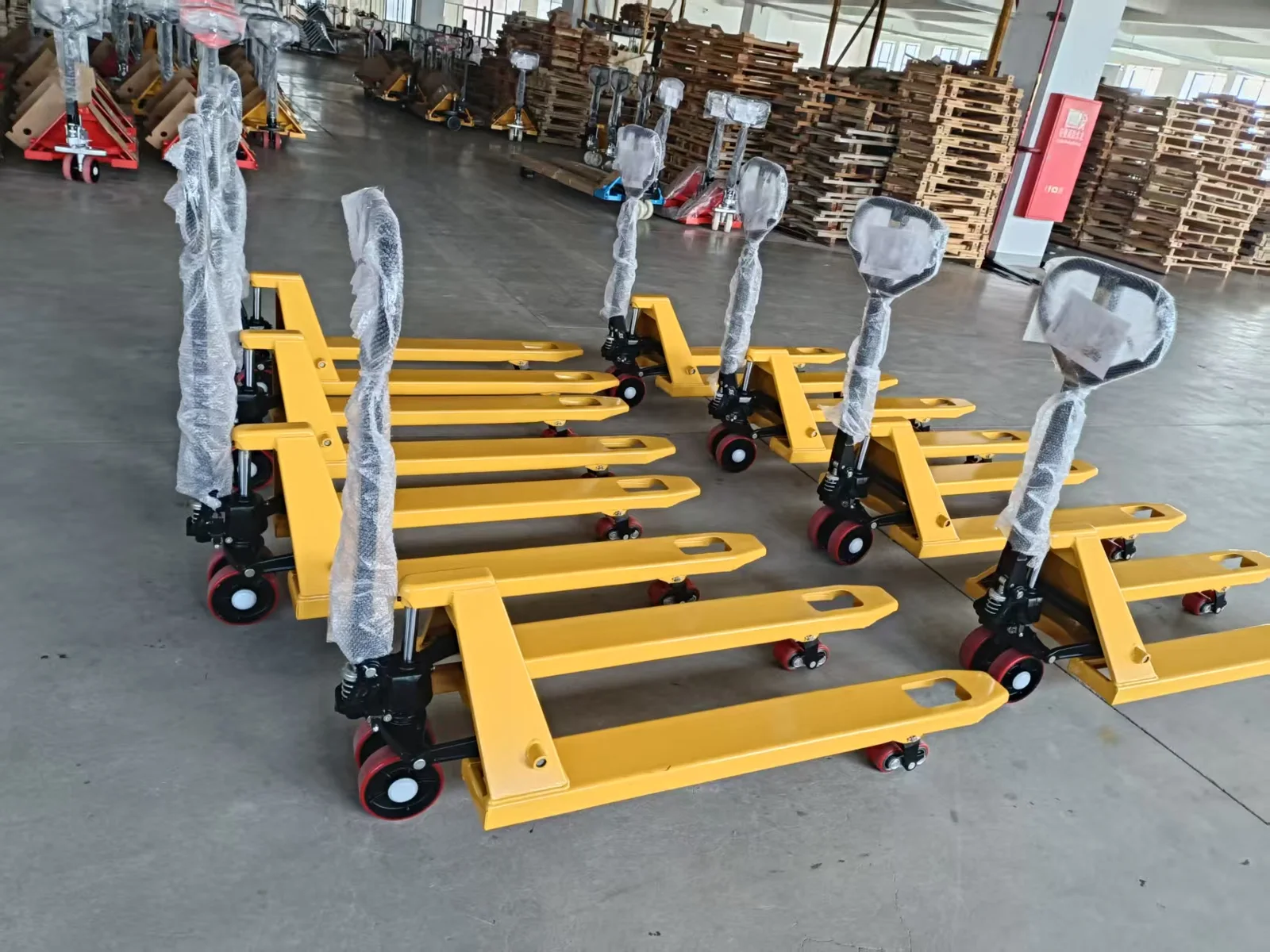
Polyurethane combines a resilient tread with load-carrying capability. It is often considered where noise, cushioning and floor preservation matter.
However, polyurethane describes a family of materials. Formulations vary in hardness, rebound, rolling resistance and resistance to environmental conditions. A softer tread is not automatically better, and two wheels of the same colour may perform differently.
For wet areas, cleaning chemicals or cold environments, ask about the specific compound rather than accepting a general PU wheel description.
Identify which wheel you are choosing
A hand pallet truck has steering wheels near the handle and smaller load rollers beneath the forks. These do not necessarily use the same material.
An electric pallet truck also has a powered drive wheel. Do not apply a hand-truck wheel recommendation to that drive wheel without checking the manufacturer's specification. Drive wheels and load rollers have different roles.
What to send before ordering
- The truck model and normal working load.
- Photos of the floor, joints and thresholds.
- Whether the truck works indoors, outdoors or in a cold room.
- Details of washing or chemical exposure.
- For replacements, wheel dimensions and photos of the existing assembly.
If possible, test the proposed configuration with a representative load on your actual route before ordering a larger batch.
Explore our pallet truck range, or email your floor photos and operating requirements to [email protected]. We can help check the wheel options available for your model.